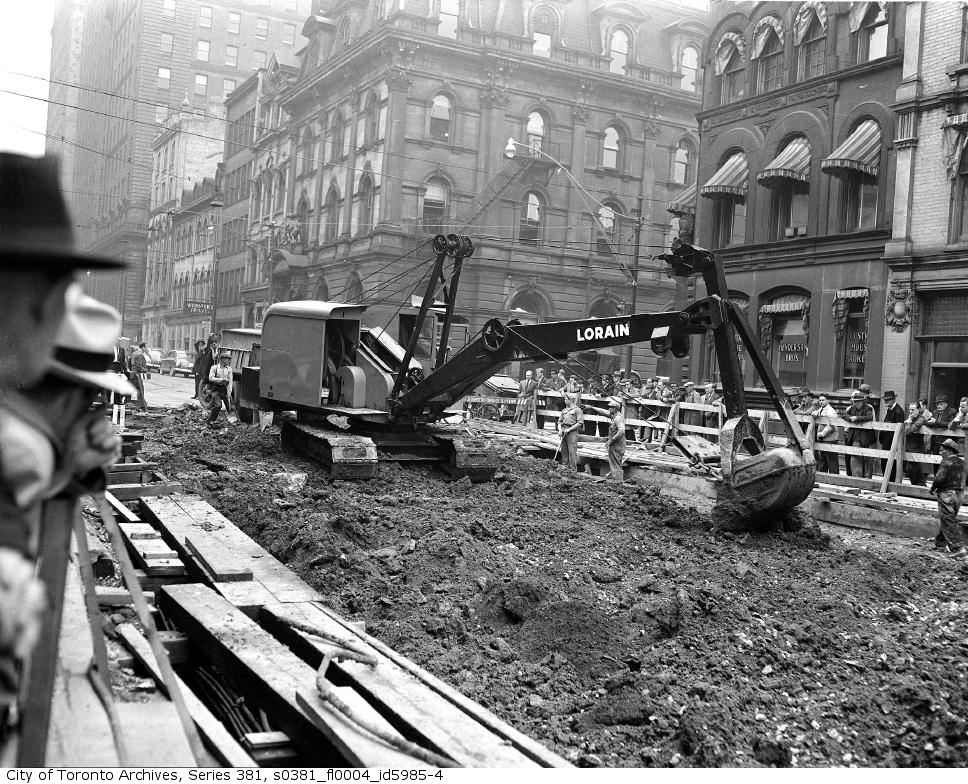
My second article to come out of my research project Laborem Ex Machina: The History of Operating Engineers and Heavy Machinery in Canada’s Construction Industry was published in the January issue of Technology and Culture, the flagship journal in the field of history of technology. Find it here: “As Ceaseless as the Sea: How Modern Construction Machines Disrupted Canadian Senses and Sensibilities, 1870s–1940s,” Technology and Culture 65: 1 (January 2024): 209-234.
Keywords: construction; machines; automobiles; nature; operating engineers
Abstract: Since the late nineteenth century, Canada required modern construction machines for industrial growth. Thanks to their novelty and visibility, these machines entered the Canadian psyche, symbolizing hopes and fears about the relentless transformations of modernity. Metaphors depicting these machines as zoomorphic and monstruous reflected the environmental-technological infrastructures they built, which redefined nature through technologies like trains, ships, and automobiles. This article discusses how Anglo-Canadians, particularly Ontarians, interpreted technology, drawing parallels with the automobile’s history. Both had a problematic coexistence with humans as equally empowering and oppressive mobile machines that were imposed on public spaces and constructed as necessary for progress. The builders used the machines’ allure to present construction as an inclusive civic spectacle and foster public tolerance for their relentless disruptions. They accomplished this faster than the automobile industry came to dominate the roads, as evident in the celebration of “sidewalk superintendents” compared to the contentious reproach of “jaywalkers.”
 Gilberto Fernandes
Leave a comment